
FASTLINK Automatic Wire Joiners are designed to make wire connection and tensioning faster and easier in applications where installers need a simple mechanical joining solution. The FASTLINK Adjustable Wire Joiner is especially practical because the same connector can be used in more than one way: it can connect two wire sections directly, or it can form an adjustable loop connection around an anchor or end post.
In our actual FASTLINK installation demonstration, the connector can also be released with a dedicated release tool and tightened further with a special tensioning tool. This makes the adjustable series different from a simple permanent wire connector.
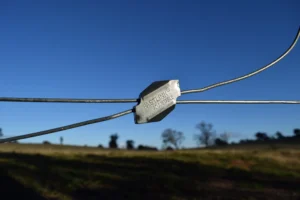
What Is a FASTLINK Adjustable Wire Joiner?
A FASTLINK Adjustable Wire Joiner is an automatic mechanical connector designed to grip wire after insertion while still allowing the connection to be released or adjusted with the appropriate tool.
The basic principle is straightforward.
The wire is inserted into the connector, where the internal gripping mechanism holds it in position. Depending on the application, another wire can enter from the opposite direction, or the same wire can be looped around an anchor point and inserted into the second opening.
This allows one connector design to handle different installation situations.
For installers working with wire or compatible wire-rope applications, the main benefit is that the connection process does not require a complicated sequence of conventional clamps or fastening components.
Two Ways We Use the Adjustable Wire Joiner
One of the most useful features shown in our FASTLINK demonstration is that the Adjustable Wire Joiner can be used in two different ways.
The first method is a direct connection between two wires.
One wire is inserted into one side of the connector, while the second wire is inserted from the opposite direction. Once both wires are engaged by the internal gripping structure, the connector forms the mechanical connection between them.
The second method is an adjustable end connection.
The wire is first inserted through the connector, then passed around an anchor, pole or end-post connection point. The free end of the wire is then inserted back into the second opening of the connector.
This creates an adjustable loop around the support point.
Because the wire can be pulled tighter after installation, this configuration is particularly useful when the installer needs to control the final tension of the connection.
How Do We Connect Two Wires?
For a direct wire-to-wire connection, the actual FASTLINK installation process is very simple.
First, insert one wire into one side of the Adjustable Wire Joiner.
Then insert the second wire into the opposite side.
The two wires therefore enter the connector from opposite directions.
Once inserted, the internal gripping mechanism engages with the wires and holds the connection in place.
There is no complicated installation sequence in the demonstration. The main task is simply to insert both wires correctly into the connector.
This makes the FASTLINK Adjustable Wire Joiner a practical Automatic Wire Joiner for applications where two wire sections need to be connected quickly.
How Can the Connection Be Released?
One important difference between the FASTLINK Adjustable Wire Joiner and some non-releasable connectors is that the connection can be undone with a dedicated release tool.
In our product demonstration, the release process is straightforward.
The release tool is inserted into the connector opening. After pushing the tool into position, the gripping mechanism can be disengaged and the wire can be removed.
This means the installer can undo the connection when adjustment, repositioning or reinstallation is required.
That feature is particularly valuable in applications where the final wire position or tension may need to be changed after the first installation.
Instead of cutting the wire or replacing the connector immediately, the connection can be released using the proper FASTLINK tool.
How Do We Make an Adjustable End Connection?
The second installation method turns the connector into an adjustable wire termination around an anchor or end post.
The wire is first inserted through one side of the FASTLINK Adjustable Wire Joiner.
It is then wrapped around the anchor, pole or end-post connection point.
The free end of the wire is brought back toward the connector and inserted into the second opening.
Once the wire is engaged, the loop can be tightened.
This creates a compact mechanical connection without requiring a separate conventional clamping assembly around the wire.
For installers, the process is easy to understand because the connector itself performs the gripping function.
How Do We Tighten the Wire?
After the adjustable connection has been formed, the wire can be pulled to increase tension.
FASTLINK also provides a special tightening tool that can be used to make the connection tighter.
In our installation demonstration, this tool is used after the wire has already been inserted through the connector and around the support point.
The installer uses the tightening tool to pull the wire further through the connector.
This allows the final connection to be adjusted instead of relying only on the initial hand tension.
The result is a connection that is easy to install but can still be tightened according to the needs of the application.
Why Is an Adjustable Wire Joiner Useful?
The most important advantage of an adjustable connector is flexibility during installation.
A standard permanent connector may be suitable when the final position is already known and no further adjustment will be necessary.
An Adjustable Wire Joiner, however, gives the installer more control.
The connection can be installed, tightened, released and adjusted using the appropriate FASTLINK tools.
This makes it useful for projects where wire tension or final positioning may need to be corrected during installation.
It also reduces the need to rebuild the entire connection simply because the original position needs to change.
Automatic Wire Joiner vs. Permanent Wire Joiner
The key difference is whether the wire can be released after it has been gripped.
A permanent automatic connector is normally designed to create a secure connection that is not intended to be easily undone.
The FASTLINK Adjustable Wire Joiner, by comparison, is designed so that the connection can be released with the dedicated release tool.
This gives installers more flexibility when working with adjustable wire connections.
The correct choice depends on the application.
If the connection needs to remain permanently fixed, a non-releasable connector may be appropriate.
If the wire needs to be tensioned, repositioned or released during installation, the adjustable version provides greater installation flexibility.
What We Learned From Our FASTLINK Installation Demonstration
The biggest advantage we observed during the actual installation is the simplicity of the connector.
For a direct connection, insert the two wires from opposite directions.
For an adjustable end connection, insert the wire, wrap it around the anchor or end post, and insert the free end back into the connector.
If the connection needs to be removed, use the release tool.
If more tension is required, use the FASTLINK tightening tool.
The same connector therefore supports several stages of field installation without requiring a complicated fastening system.
That is why the FASTLINK Adjustable Wire Joiner is designed around three practical objectives: easy installation, adjustable tension and a reliable mechanical connection.
Frequently Asked Questions
What is an Automatic Wire Joiner?
An Automatic Wire Joiner is a mechanical connector that grips wire after it is inserted into the connector body. Depending on the design, it can be used to connect two wires or create an end connection around an anchor point.
Can the FASTLINK Adjustable Wire Joiner be released?
Yes. FASTLINK provides a dedicated release tool. The tool is inserted into the connector to disengage the gripping mechanism so the wire can be removed or repositioned.
Can the Adjustable Wire Joiner connect two wires?
Yes. In the FASTLINK installation method, one wire is inserted from one side and the second wire enters from the opposite direction to create a direct wire-to-wire connection.
Can the connector be used around an end post?
Yes. The wire can pass through the connector, wrap around an anchor or end post, and then return into the second connector opening to create an adjustable loop connection.
How can I increase the tension after installation?
FASTLINK offers a dedicated tightening tool that can pull the wire further through the Adjustable Wire Joiner and increase the tension of the installed connection.
Choose the Right Automatic Wire Joiner
If your project requires an Automatic Wire Joiner, Adjustable Wire Joiner or connector for wire and compatible wire-rope applications, FASTLINK can help match the correct connector to your wire specification and installation method.
Send us the wire type, wire diameter and intended application, and our team can recommend an appropriate FASTLINK connection solution.