
FASTLINK Guy Wire Deadend and Guy Wire Splice connectors are designed for fast and reliable connection of steel strands used in electrical and telecommunication networks. In our actual installation demonstration, both the deadend and splice can be installed through a simple process: straighten the steel strand, clean the insertion area, and push the strand into the connector. For a splice connection, an insertion mark helps confirm that the strand has been fully inserted.
These automatic steel strand connectors are also commonly described in the market as Strand Vise and Strand Link solutions.
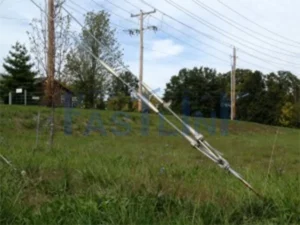
What Are Guy Wire Deadend and Guy Wire Splice Connectors?
A Guy Wire Deadend is used to terminate and secure a steel guy strand, while a Guy Wire Splice is used to connect two steel strand sections together.
Both products use an internal automatic gripping mechanism. Once the prepared steel strand is inserted into the connector, the internal gripping structure holds the strand in position.
For overhead electrical and telecommunication applications, this type of automatic connector helps reduce the number of manual fastening steps required during installation.
FASTLINK provides two main solutions for steel strand applications:
- Guy Wire Deadend / Strand Vise – used for terminating a steel strand.
- Guy Wire Splice / Strand Link – used for joining two steel strands.
Although the two products perform different functions, their basic installation method is very similar.
Where Are Steel Strand Automatic Connectors Used?
FASTLINK steel strand connectors are designed for applications where guy strands are used to provide mechanical support in electrical and telecommunication networks.
Typical applications may include:
- Electrical distribution networks
- Telecommunication lines
- Utility poles
- Overhead line support systems
- Guy wire termination
- Steel strand joining
- Steel strand repair and extension
In these applications, the guy strand provides mechanical support rather than carrying electrical current as the primary conductor.
The connector therefore needs to grip the steel strand securely while also allowing installers to complete the connection efficiently in the field.
How Do We Install a Guy Wire Deadend?
The FASTLINK Guy Wire Deadend, also commonly referred to as a Strand Vise, is designed to make strand termination straightforward.
In our own product installation demonstration, the process starts with proper preparation of the steel strand.
1. Straighten the Steel Strand
Before inserting the strand into the deadend, make sure the end of the strand is straight.
This is important because a bent or deformed strand may be more difficult to insert smoothly into the connector.
A straight strand also helps it enter the internal gripping mechanism correctly.
2. Clean the Strand
Use a suitable wire brush to clean the section of steel strand that will enter the Guy Wire Deadend.
The purpose is to remove surface dirt or loose contamination before installation.
This step only takes a short time but helps prepare the strand for consistent insertion.
3. Insert the Strand
After the strand has been straightened and cleaned, gently push it into the deadend connector.
The installation itself is very simple.
Once the strand enters the internal gripping section, the connector automatically engages with the strand.
There is no complicated sequence of bolts or separate clamping components shown in the FASTLINK installation process.
The result is a fast and easy Guy Wire Deadend installation.
How Do We Install a Guy Wire Splice?
A Guy Wire Splice, sometimes called a Strand Link, performs a different job.
Instead of terminating the strand, it joins two separate steel strands together.
Because both sides need to be correctly inserted into the connector, FASTLINK recommends using a simple marking method during installation.
1. Prepare the First Steel Strand
Start by straightening and cleaning the strand in the same way as for the deadend installation.
A properly prepared strand makes insertion easier and more controlled.
2. Mark the Insertion Position
Before inserting the strand, place a visible mark at the required position on the strand.
This is one of the most useful details demonstrated in our actual FASTLINK installation video.
The mark provides a simple visual reference.
After the strand has been pushed into the Guy Wire Splice, the installer can look at the position of the mark and confirm whether the strand has been inserted far enough.
3. Insert the Strand into the Splice
Push the first strand into the connector until the insertion mark reaches the expected position.
This allows the installer to visually confirm that the strand is fully inserted.
4. Repeat on the Other Side
The second side follows essentially the same process.
Prepare the second steel strand and insert it into the opposite end of the splice.
Once both strands are correctly inserted, the Strand Link connects the two steel strand sections together.
The entire installation process is straightforward, repeatable and easy to understand.
Strand Vise vs. Strand Link: What Is the Difference?
The easiest way to understand the difference is to look at what happens to the steel strand.
A Strand Vise terminates one steel strand.
A Strand Link joins two steel strands.
The terms are closely related to Guy Wire Deadend and Guy Wire Splice:
Strand Vise = Guy Wire Deadend
It is normally used where a guy strand needs to terminate and be secured at the end of the support system.
Strand Link = Guy Wire Splice
It is used where two steel strand sections need to be joined together.
This distinction is important when selecting the correct connector for a project.
If your requirement is to terminate the strand, choose the appropriate Guy Wire Deadend.
If your requirement is to join two strands, select the appropriate Guy Wire Splice.
Why Is Strand Preparation Important?
Automatic connectors are designed to simplify installation, but the condition of the steel strand still matters.
Based on our actual installation process, FASTLINK recommends checking three basic points before completing the connection.
Keep the strand straight.
A straight strand can enter the connector more smoothly.
Clean the insertion section.
Use a suitable brush to prepare the strand before insertion.
Check the insertion depth.
For a Guy Wire Splice, use a visible mark so that the installer can confirm the strand is fully inserted.
These steps are simple, but they make the installation process easier to repeat consistently.
Why Use FASTLINK Guy Wire Connectors?
FASTLINK focuses on automatic connection solutions for wire, strand, power and telecommunication applications.
Our Guy Wire Deadend and Guy Wire Splice products are designed around several practical installation requirements:
- Fast installation
- Simple strand preparation
- Automatic gripping
- Clear installation procedure
- Suitable solutions for strand termination and joining
- Multiple connector options for different steel strand requirements
For field installers, the main advantage is simplicity.
The installer does not need to follow a complicated connection process. Once the correct connector has been selected, the strand can be prepared and inserted using a clear series of steps.
As demonstrated in our own installation process, the connection is easy, fast and reliable.
Frequently Asked Questions
What is a Guy Wire Deadend?
A Guy Wire Deadend is a mechanical connector used to terminate and secure a steel guy strand. FASTLINK automatic Guy Wire Deadends use an internal gripping mechanism that engages the strand after insertion.
What is a Guy Wire Splice?
A Guy Wire Splice is used to connect two steel strand sections together. The two strands are inserted from opposite sides of the splice to form a continuous mechanical connection.
Is a Strand Vise the same as a Guy Wire Deadend?
The terms are commonly used for similar types of automatic strand termination products. A Strand Vise is designed to grip and terminate the end of a steel strand.
What is a Strand Link?
A Strand Link is an automatic connector used to join two steel strand sections. It performs a similar function to a Guy Wire Splice.
How do you install a Guy Wire Splice?
Straighten and clean the steel strand first. Make an insertion mark on the strand, then push it into the splice until the mark confirms the correct insertion depth. Repeat the same process on the opposite side.
Find the Right Guy Wire Connector for Your Project
If your electrical or telecommunication project requires a Guy Wire Deadend, Guy Wire Splice, Strand Vise or Strand Link, send FASTLINK your steel strand specification and application requirements.
FASTLINK can help you select the appropriate automatic connector for your guy wire or steel strand application.